Remote AI Research Engineer at AI Innovation Hub, Ministry of Defense Healthcare Services, Saudi ArabiaLecturer, Dept of CSE, BRAC UniversityB.Sc. graduate, CSE, BUET
Assalamu alaikum, and hello! I'm Shanto, an AI Research Engineer, and my research is equal parts healthcare and security.
In healthcare, I build intelligent multimodal AI systems for people with Autism Spectrum Disorder in Saudi Arabia, working under Prof. Ehsan Hoque. That work is now heading into a clinical trial and a national health app used by millions, and I want to take it further, toward agentic AI that works inside everyday clinical care.
In security, my work with researchers at Penn State has exposed critical vulnerabilities in large language and vision–language models. I came to the field through capture-the-flag competitions, and I'm just as keen to explore what AI can do in cybersecurity itself: attacking, defending, and finding the loopholes nobody has spotted yet.
I've published at ACL, ACM CCS, Interspeech and EACL, usually as first or joint first author. I also led BUET's team to first runner-up at the IEEE Signal Processing Cup, and co-founded Olive AI to bring clinical AI into everyday practice in Bangladesh. I'm applying to Ph.D. programs for Fall 2027.
With the progress AI has made, I believe the next breakthrough lies in turning it into genuinely intelligent systems for high-stakes domains, and healthcare is where I want to build them: multimodal, trustworthy, agentic systems that embed into real clinical workflows to plan and act, support differential diagnosis, personalise care, and make it available at scale. I work toward that as an AI Research Engineer at the AI Innovation Hub of Saudi Arabia's Ministry of Defense Healthcare Services, led by Prof. Ehsan Hoque with research scientist Dr. Sabri Boughorbel. There I co-built Harf-Speech and Digital Harf, among others, which are now inside a national health app with a clinical trial opening for children with autism. I also co-founded Olive AI to build multimodal clinical AI for everyday practice in Bangladesh, now in its first trials with clinicians.
With AI and autonomous agents advancing as fast as they are, I believe this is the most important moment to rethink how we secure them, and the same progress is opening up security work itself, from vulnerability discovery to incident response. I want to explore both sides of that: the offensive and defensive capabilities of frontier models and autonomous systems, from finding and exploiting vulnerabilities to fixing them, so that AI stays secure, trustworthy and safe as we give it more to do. I have collaborated on this with Md Rafi Ur Rashid, a Ph.D. student at Penn State, first on SequentialBreak, a novel jailbreak attack on large language models, and then with him and his advisor Prof. Shagufta Mehnaz on SIVA, a split-image attack against vision–language models, together with a defence against it. Working on both is what grew my interest in this field.
Vision–language models have learned to refuse harmful images, but only when the harm arrives in one piece. Splitting it across fragments quietly defeats their safety training. We introduce attacks that expose the gap and a defence that closes it.
Children with autism in Arabic-speaking regions face a shortage of specialists and almost no culturally relevant therapy material. Digital Harf carries clinician-led therapy into the home through an engine that generates culturally grounded content, treating cultural fit as core infrastructure rather than an afterthought.
As large language models move into real products, their guardrails stay surprisingly brittle. SequentialBreak exposes a striking blind spot: burying a harmful request inside a chain of ordinary ones slips it past those defences in a single query.
What if speech assessment were available anytime, anywhere, without losing clinical quality? Arabic-trained speech pathologists are scarce, so Harf-Speech evaluates Modern Standard Arabic at the same fine-grained level clinicians use, with results validated against certified specialists.
Today's vision–language models stay confident even when they are wrong. This work takes a neglected question, whether they know what they do not know, and delivers the first broad benchmark of their uncertainty along with a way to measure it even for closed, commercial models.
AI-generated faces are now hard to tell from real ones, and catching them in the wild is still open. Leading the BUET team at ICASSP 2025, we built a detector that blends complementary vision models to generalise across unseen generation methods and source datasets.
Methane drives climate change hard, yet spotting its plumes from orbit is buried under false alarms that demand expert review. AttMetNet is a lightweight attention-driven model that homes in on a methane-sensitive spectral signature, which makes reliable global monitoring practical.
Co-developed Digital Harf, a multimodal AI-assisted speech and language therapy platform — three therapy modules and an AI caregiver assistant — built on an agentic synthetic data engine that generates culturally and therapeutically grounded content on demand.
Co-built Harf-Speech, the assessment engine underneath it, fine-tuning Whisper, Omni-ASR and wav2vec2 for Arabic phoneme-level scoring that outperformed Azure Cognitive Services on the clinical task.
Took the platform through the regulatory path, co-preparing the IRB and Saudi FDA submissions and co-designing the clinical trial now opening with King Fahad Armed Forces Hospital, the Mohammed Bin Salman Autism Program and the Madinah Autism Society.
Integrated it into Sehhatek, Saudi Arabia's national health app, where it currently sits in staging and opens to the public once the trial reports.
Contributed to Waee, an autism screening effort with the University of Cambridge and Dr. Yahya Bokhari, and AIDA, a screening collaboration with the MIT Media Lab.
Sep 2026 — PresentDhaka
Lecturer
Department of Computer Science and Engineering, BRAC University
Full-time faculty appointment, since 15 September 2026.
2025 — Present
Co-founder
Olive AI Private Limited
A hobby project that grew into an ongoing startup, now starting its first trials with private-practice clinicians. I co-lead the research, design and engineering.
Building a multimodal pipeline that listens to a doctor–patient consultation and writes the prescription from it: clinical notes, chief complaint, history, medications, investigations and advice.
Ambient speech capture and long-form ASR do the listening, so the clinician writes less and looks at the patient more.
Taught programming and core computer science to more than 7,000 students over three years at one of Bangladesh's largest online education platforms, covering languages, data structures, algorithms and object-oriented design.
Wrote the lesson plans and assessments from scratch, turning abstract material into something a beginner can hold on to.
Jun 2023 — Dec 2023Remote
Coding Expert
Remotasks · Scale AI
Evaluated and improved how frontier models, GPT-4 and Gemini among them, generate, complete and debug code, writing the reference solutions and explanations that fed back into training.
20251st Runner-Up, IEEE Signal Processing Cup at ICASSP. Deepfake Face Detection in the Wild, leading the BUET team.
Award
2025Highly Commended, Global Undergraduate Awards. Undergraduate thesis ranked among the top research worldwide in computer science.
Award
2020–25Dean's List (3×) and University Merit (2×) at BUET, for academic standing.
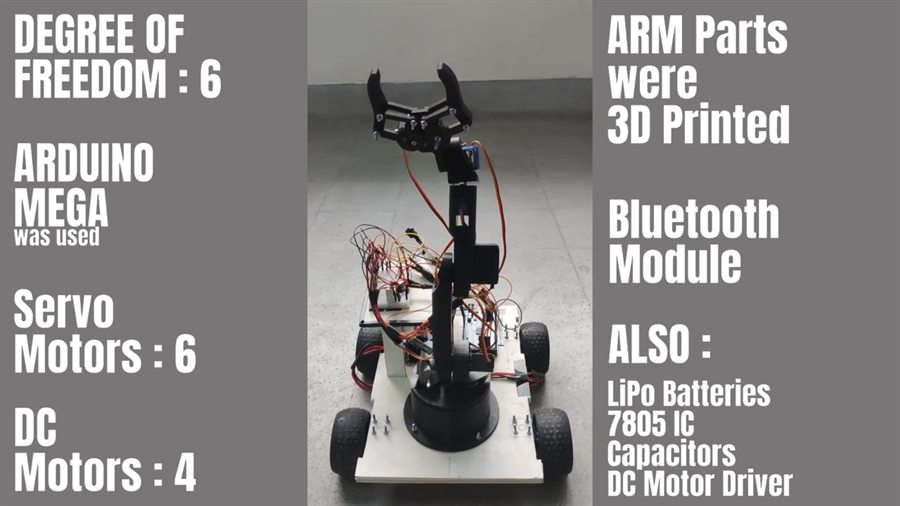
2024Honourable Mention, CSE Department, BUET. Six-degree-of-freedom robotic arm on a mobile bot.
20231st Runner-Up, Intra BUET Capture The Flag. Second of 35 teams.
20229th, BD-Flag Hunt CTF. Ninth of more than 100 teams nationally.
Leadership & service
Leadership
2025– PresentCo-founder, Olive AI Private Limited. Co-lead research, design and engineering on a multimodal pipeline that turns doctor–patient consultations into clinical notes and prescriptions.
2025Organiser, Deep Learning Sprint, BUET CSE Fest. Problem formulation and dataset curation for an open contest with more than 120 teams.
Track 1Track 2
2024–25Director of Technology, BUET Cyber Security Club. Ran technical operations, inter-university competitions and workshops.
2024Organiser, Inter-University Capture The Flag. Built and maintained the full competition infrastructure for 60+ teams at BUET CSE Fest.
Event
Service
2026Peer reviewer, CIKM 2026 and ICDE 2026. Reviewed papers under the supervision of Dr. Tanzima Hashem.